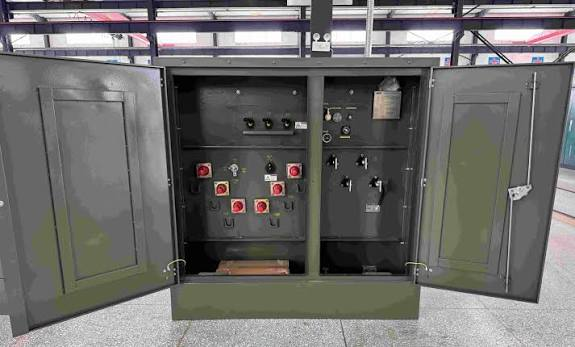
Power distribution systems need equipment that can operate reliably outside buildings while remaining accessible for inspection and maintenance. In many commercial, industrial, residential, and infrastructure projects, three-phase pad-mounted transformers provide a practical way to reduce distribution voltage and supply power to local electrical networks.
These transformers are installed on concrete pads or similar foundations rather than elevated poles or placed inside dedicated transformer rooms. Their enclosed construction makes them suitable for locations where overhead equipment is undesirable or where underground electrical distribution is preferred.
What Is a Three-Phase Pad-Mounted Transformer?
A three-phase pad-mounted transformer is a ground-level transformer designed to serve three-phase electrical distribution systems.
It typically has an enclosed metal cabinet containing the transformer, connections, protective components, and other electrical equipment. The enclosure provides protection against weather and helps restrict access to energized components.
These transformers are commonly connected to underground medium-voltage distribution networks. The transformer reduces the incoming voltage to a lower voltage suitable for buildings, equipment, and local distribution systems.
Three-phase operation is particularly useful for commercial and industrial facilities because many motors, HVAC systems, pumps, and other electrical equipment operate on three-phase power.
Why Ground-Level Installation Matters
Traditional overhead distribution often uses pole-mounted transformers and exposed conductors. While this arrangement can be effective, it may not suit every location.
Pad-mounted transformers allow electrical equipment to be installed at ground level and connected to underground cables. This can be useful in:
- Residential developments
- Shopping centers
- Office complexes
- Industrial parks
- Hospitals
- Schools
- Warehouses
- Data facilities
- Infrastructure projects
Ground-level installation also avoids the need for transformer poles and overhead conductors within the immediate area.
The transformer still requires appropriate clearances, access, grounding, and protection, so the installation location needs to be planned carefully.
Suitable for Underground Distribution Networks
One of the main applications for three-phase pad-mounted transformers is underground electrical distribution.
Medium-voltage cables can be routed underground from a distribution network to the transformer. The transformer then reduces the voltage before electricity is delivered to the customer’s electrical system.
Underground distribution can reduce exposure to certain weather-related problems associated with overhead lines. It can also be useful in areas where visual appearance, land use, or local planning requirements make overhead electrical equipment less desirable.
Cable routing, drainage, access, and protection from physical damage still need to be addressed during installation.
Three-Phase Power for Commercial and Industrial Loads
Three-phase systems are widely used for larger electrical loads because they can efficiently supply motors and other three-phase equipment.
A pad-mounted transformer can supply power to equipment such as:
- Industrial motors
- Pumps
- HVAC systems
- Refrigeration equipment
- Production machinery
- Elevators
- Commercial lighting systems
- Building services
- Charging infrastructure
The transformer’s capacity must be selected according to the expected load. Engineers typically consider connected load, maximum demand, power factor, starting currents, and anticipated future expansion.
Enclosed Construction Provides Physical Protection
Outdoor electrical equipment needs protection from rain, dust, sunlight, and accidental contact. Pad-mounted transformers use enclosed cabinets designed for outdoor conditions.
The cabinet also provides a physical barrier around high-voltage components. Access is controlled through secured doors and appropriate safety procedures.
The enclosure does not eliminate the need for proper installation or electrical safety. Clearances around the transformer must be maintained, and only qualified personnel should work on the equipment.
Cooling and Heat Management
Transformers generate heat as electrical energy passes through their windings and core. Managing this heat is necessary for reliable operation.
Many pad-mounted transformers use insulating liquid to provide electrical insulation and assist with heat transfer. Heat moves from the internal components into the transformer fluid and then toward the external tank surfaces.
The transformer rating and cooling arrangement determine how much load it can safely handle under specified conditions.
Ambient temperature also affects transformer performance. Locations with high temperatures may require additional consideration during equipment selection and installation.
Protection and Safety Features
A properly designed pad-mounted transformer installation includes protection against electrical faults and abnormal operating conditions.
Depending on the transformer design and distribution system, protective equipment can include:
- Fuses
- Circuit breakers
- Surge protection
- Grounding systems
- Pressure relief devices
- Temperature monitoring
- Internal fault protection
Surge protection can help protect transformer insulation from transient overvoltages associated with lightning or switching events.
Grounding is particularly important for outdoor electrical installations. The transformer tank and relevant electrical components should be connected to an appropriate grounding system according to the applicable standards.
Space and Site Planning
Although pad-mounted transformers do not require a pole or transformer room, they still require dedicated installation space.
The site should provide enough room for:
- Transformer access
- Cable connections
- Inspection and maintenance
- Safe working clearances
- Ventilation
- Emergency access
The transformer should not be placed where vehicles or construction equipment could easily strike it. In areas with vehicle traffic, physical barriers may be required.
Drainage should also be considered, particularly for outdoor installations where standing water could affect the foundation or surrounding electrical infrastructure.
Maintenance of Pad-Mounted Transformers
Routine inspection helps identify conditions that could affect transformer performance.
Maintenance may include checking the enclosure, inspecting connections, looking for signs of overheating, checking for fluid leaks, and examining protective equipment.
For oil-filled units, the condition of the insulating liquid may also be monitored. Oil testing can provide information about moisture, dielectric properties, and potential internal problems.
Thermal inspection can identify abnormal heating around connections and other components.
Maintenance schedules should follow the manufacturer’s recommendations and take local operating conditions into account.
Where Pad-Mounted Transformers Make Sense
The popularity of three-phase pad-mounted transformers is closely linked to the growth of underground distribution systems. They provide a ground-level method of reducing medium voltage for local three-phase electrical loads without relying on pole-mounted equipment.
Their enclosed design, compatibility with underground cables, relatively compact footprint, and suitability for commercial and industrial loads make them useful across many types of outdoor electrical projects.
However, the transformer should always be selected according to the actual electrical requirements of the site. Voltage, KVA rating, fault levels, load characteristics, environmental conditions, and future expansion all need to be considered.
Planning for Reliable Outdoor Power Distribution
Outdoor electrical distribution requires equipment that can handle environmental exposure while providing safe access for maintenance. Three-phase pad-mounted transformers are designed around these requirements and can serve a wide range of underground distribution applications.
Their effectiveness depends on proper sizing, installation, grounding, protection, and maintenance. When these factors are addressed during project planning, pad-mounted transformers can provide a dependable connection between medium-voltage distribution networks and the lower-voltage systems used by commercial, residential, and industrial customers.
