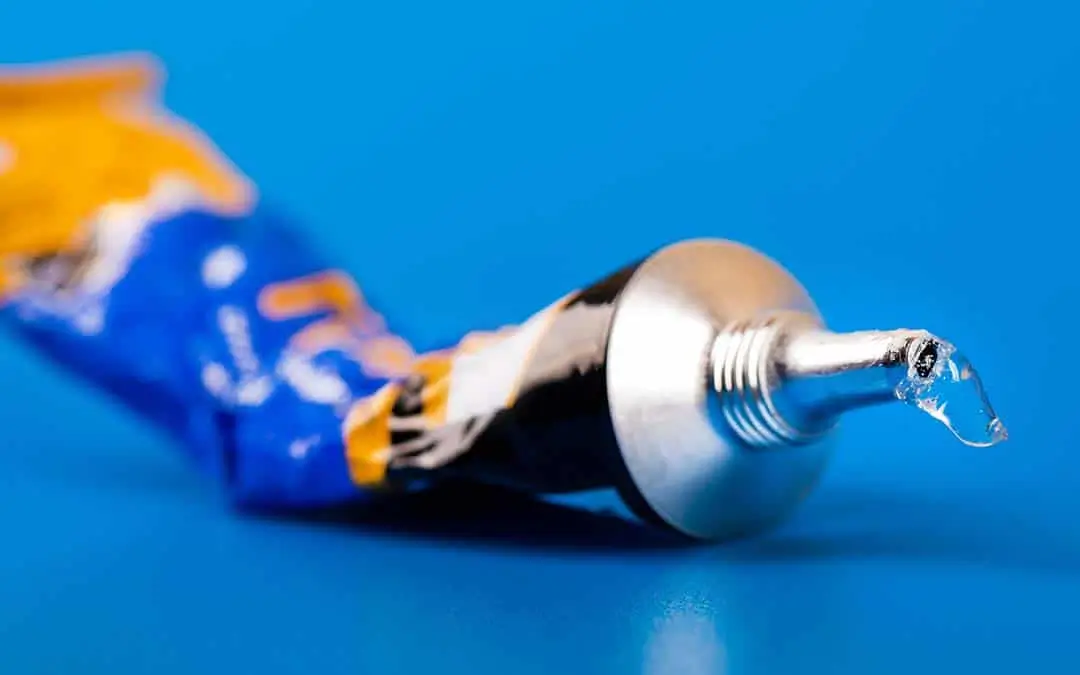
Adhesive technology has become an important part of modern manufacturing because bonding can reduce component weight, distribute loads, and simplify assembly. However, adhesive materials can face challenging conditions during operation, particularly when they are exposed to elevated temperatures for extended periods.
Thermal exposure can gradually change polymer structures and affect mechanical performance. Researchers and manufacturers therefore continue to investigate ways of improving the stability of adhesive systems.
One promising area involves the use of fine mineral reinforcement. When selected and dispersed correctly, very small particles can interact with the polymer matrix and influence its mechanical behavior.
Read Also: Curved Glass Manufacturing: Key Considerations for Modern Production
Understanding the Polymer Matrix
Most structural and industrial adhesives depend on a polymer network to provide their basic mechanical properties.
The network determines characteristics such as flexibility, strength, hardness, and resistance to deformation. During heating, molecular motion increases, and prolonged exposure can lead to changes within the polymer structure.
In some systems, these changes may include chain scission or deterioration of crosslinked regions. As the network changes, the adhesive can gradually lose its original properties.
The challenge is therefore to maintain the integrity of the polymer structure for as long as practical.
How Reinforcing Particles Work
Fine particles can interact with a polymer matrix in several ways.
They may help transfer mechanical loads, restrict certain forms of molecular movement, or distribute stresses throughout the material.
The effectiveness of this approach depends strongly on particle dispersion. A well-dispersed material can provide a larger effective interfacial area, while poorly dispersed particles may form agglomerates.
For this reason, particle selection and processing are equally important.
Surface Area and Interfacial Contact
Particle size can have a significant influence on composite behavior.
Smaller particles can provide a high surface area relative to their volume. This creates more opportunities for interaction between the inorganic phase and polymer matrix.
Such interactions may contribute to reinforcement and affect the way stress is distributed during mechanical loading.
However, high surface area can also increase processing challenges because fine particles may influence viscosity and require effective mixing.
Thermal Exposure Changes the Equation
An adhesive that performs well at room temperature may behave differently when exposed to high temperatures.
During thermal aging, polymer chains can become more mobile, while chemical degradation may occur depending on the material system.
A reinforcing phase can potentially influence these processes by interacting with the polymer and restricting some forms of molecular movement.
The exact mechanism depends on the chemistry and test conditions, so experimental validation is essential.
Why Dispersion Quality Matters
A common challenge in nanocomposite development is achieving uniform dispersion.
If particles remain evenly distributed, the composite can potentially benefit from their surface interactions throughout the polymer matrix.
If particles cluster together, however, the resulting agglomerates can create weak areas or interfere with the intended reinforcement mechanism.
Mixing speed, mixing duration, equipment design, surface chemistry, and addition sequence can all influence dispersion quality.
Balancing Flexibility and Strength
Adhesive design often involves a compromise between strength and flexibility.
A very rigid material may resist deformation but could have difficulty accommodating movement between bonded components. A highly flexible adhesive may absorb movement but provide insufficient mechanical support for certain applications.
Fine reinforcement can be investigated as part of a broader formulation strategy to achieve a useful balance.
Rather than focusing on one performance number, developers should consider how strength and elongation change together during aging.
Testing Mechanical Retention
One useful way to evaluate durability is to compare the material before and after thermal exposure.
Measurements such as tensile strength and elongation can show whether the adhesive retains its mechanical characteristics after aging.
A material that maintains both properties more consistently may offer advantages for applications involving prolonged heat exposure, although suitability must always be confirmed under actual application conditions.
Industrial Applications
High-temperature adhesive technology can be relevant to many industries.
Automotive manufacturers may use bonding materials around components exposed to engine heat or vibration. Electronics manufacturers may require materials that remain stable near heat-generating components.
Aerospace and industrial equipment can also present demanding thermal environments.
Each application has different qualification requirements, so material selection should be based on actual service conditions rather than general assumptions.
Choosing the Right Reinforcement
When evaluating a fine inorganic additive, engineers should consider:
- Particle size and surface area
- Surface chemistry
- Thermal stability
- Compatibility with the polymer
- Dispersion behavior
- Effect on viscosity
- Required loading level
- Processing method
- Final mechanical properties
These factors work together. A material with excellent theoretical properties may not be suitable if it cannot be dispersed consistently or processed efficiently.
Technical research into fumed tio2 heat resistant adhesive illustrates how finely divided titanium-based materials can be evaluated as part of an adhesive reinforcement strategy.
From Laboratory to Production
Laboratory testing is only the first stage.
Once a promising formulation has been identified, manufacturers must determine whether it can be produced consistently. Scale-up can reveal challenges that are not obvious during small-batch experiments.
Production teams may need to optimize mixing energy, temperature, addition sequence, filtration, packaging, and storage.
Quality control should then monitor important properties to ensure that batches remain consistent.
Frequently Asked Questions
1. Why is particle dispersion important in adhesive composites?
Uniform dispersion can improve contact between the particles and polymer matrix. Poor dispersion may create agglomerates that affect processing and mechanical performance.
2. Can fine particles help an adhesive remain flexible after heating?
They may influence polymer-chain movement and stress distribution, but the outcome depends on the specific formulation. Testing is necessary to determine the actual effect.
3. What should manufacturers evaluate before commercial production?
They should evaluate mechanical performance, thermal aging, processing behavior, storage stability, dispersion quality, and batch consistency.
Conclusion
The development of durable adhesive systems requires a detailed understanding of how polymers, reinforcing particles, processing conditions, and thermal exposure interact. Fine mineral materials can offer useful opportunities for modifying mechanical behavior, but their effectiveness depends on careful formulation and dispersion.
A systematic testing and scale-up process allows manufacturers to identify solutions that are not only technically promising but also practical for consistent industrial production.
