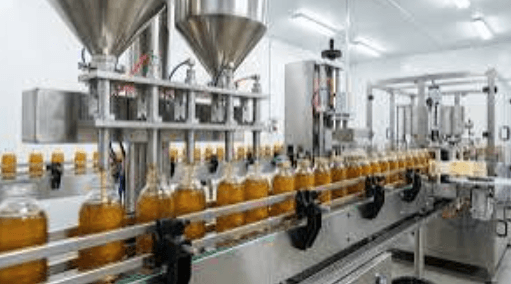
Manufacturers producing liquid goods at scale, whether cleaning products, beverages, or personal care items, eventually reach a point where standalone filling machines are no longer sufficient. A complete bottle filling production line integrates multiple processes into a coordinated system, and understanding how these components work together is essential for anyone planning a production upgrade.
The Anatomy of a Complete Filling Line
A typical production line begins with bottle unscrambling or feeding, where empty containers are oriented and fed into the line in a consistent, controlled manner. From there, bottles move through the filling stage itself, followed by capping or sealing, labeling, and finally packaging or palletizing for distribution. Each stage needs to operate at a compatible speed to avoid bottlenecks, since a line is only as fast as its slowest component.
Modern bottle filling production line systems are increasingly designed with modularity in mind, allowing manufacturers to add or reconfigure stages as production needs evolve, rather than committing to a fixed configuration that becomes difficult to adapt later.
Balancing Line Speed With Product Complexity
Line speed is often the first metric manufacturers focus on when evaluating production equipment, but raw speed matters less than sustained, reliable throughput across varying product types. A line that runs extremely fast for one product formulation but requires lengthy changeovers or frequent adjustments for others may deliver lower overall output than a moderately paced line with faster changeover capability, particularly for manufacturers producing multiple product variants on the same equipment.
Automation Levels and Labor Considerations
Production lines today span a wide spectrum of automation, from semi-automatic systems requiring operator intervention at each stage to fully automatic lines that run with minimal human involvement beyond monitoring and quality checks. The right level of automation depends heavily on production volume, available labor, and the complexity of the products being filled, since highly automated systems typically carry higher upfront costs that only make economic sense at sufficient production volumes.
Quality Control Integration
Modern filling lines increasingly incorporate inline quality control checks, such as fill level verification, cap torque testing, and label placement inspection, directly into the production flow rather than relying solely on post-production sampling. This approach catches defects earlier in the process, reducing waste and improving overall product consistency reaching the market.
See also: Everyone’s Arguing About Dihexa Capsules vs. Injections. That’s the Wrong Fight.
Planning for Future Scalability
Manufacturers investing in a new production line should consider not just current production requirements but anticipated growth over the coming years. Selecting equipment with expansion capacity built in, whether through additional filling heads, modular conveyor sections, or compatible upstream and downstream equipment, can save significant cost compared to a complete line replacement when production volumes increase.
Working With an Experienced Line Integrator
Because a complete production line involves coordinating multiple pieces of equipment from potentially different manufacturers, working with a supplier experienced in full line integration, rather than sourcing individual components separately, tends to reduce compatibility issues and project delays during installation and commissioning.
Conclusion
A well-designed bottle filling production line balances speed, flexibility, and quality control to deliver consistent output across varying production demands. Manufacturers who plan for scalability and work with experienced integration partners position themselves for smoother operations as production needs evolve over time.
FAQs
Q1: How do I determine the right automation level for my production line? This depends primarily on production volume and labor availability; higher automation levels generally make economic sense at higher production volumes.
Q2: What causes bottlenecks in a bottle filling production line? Mismatched speeds between line stages, such as a fast filler paired with a slower capping unit, are a common cause of bottlenecks.
Q3: Is it possible to expand a production line after installation? Yes, many modern lines are designed with modular components that allow for capacity expansion without requiring a complete system replacement.
